If the audio seems quiet for any reason, please make sure to turn up your volume so that you can clearly hear my answer to the evaluation question:
Showing posts with label question. Show all posts
Showing posts with label question. Show all posts
Friday, 22 March 2013
Evaluation Question 4
For my fourth evaluation question, I have created a video with me narrating over it.
If the audio seems quiet for any reason, please make sure to turn up your volume so that you can clearly hear my answer to the evaluation question:
If the audio seems quiet for any reason, please make sure to turn up your volume so that you can clearly hear my answer to the evaluation question:

Evaluation Question 3
What have you learned from your audience feedback?
I have learned a great deal from my audience feedback, and my audience in many cases has been the deciding factor in my choice of fonts, images, etc.
Throughout the creation of my media products, I always considered my audience when making decisions, since all my products are aimed at my audience, and what appeals to them is most likely to grab their attention.
The Music Video
Whilst making my music video, I asked my audience religiously if there were improvements that could be made, once I had completed the Rough Cut.


I asked for feedback in nearly every post, as well as in the forms of questionnaires, polls, and even just asking my media classmates for their opinion on my work.
I did this so that I could achieve products that appealed most to my target audience and thus create the most successful product possible.
What I learnt from feedback was that people liked my animation, but it needed to be extended where it was still and had no movement, since it dragged on. I also learnt that the lighting in certain shots wasn't to its fullest potential.

Comments such as the ones above caused me to make improvements to my music video through further animation and experimentation with effects. Therefore I am glad my work was criticised as it allowed me to learn where my video felt flawed and thus create a more professional and appealing (to my audience) media product.
The Digipak
The audience played a major role in deciding on the content of my Digipak, as they made decisions such as the name of the album, font style and the images that were going to be used.


They audience also let me know, through a questionnaire, whether any changes should be made to my Digipak in order to improve it in any way.

So from my audience feedback, I learnt what the most popular/appealing content would be, as well as if the audience though any content should be added/removed/changed. Learning all this information ultimately allowed me to create a better and more appealing product, since the audience is who I'm trying to appeal the product to, and applying what they most liked meant the most appealing product possible.
The Magazine Advert
I learnt much from the audience about my advert through the use of questionnaire, much like my digipak.

Learning how my audience felt about my advert (whether anything should be added/removed/changed) allowed me to learn whether my product was appealing to my audience (which was of course my aim, along with making it look professional). Knowing it was appealing through my questionnaire allowed me to have ease of mind, as otherwise I may have added/removed/changed the content unnecessarily, thus ruining my advert, but thanks to my audience I learnt that the advert was perfect the way it was, allowing me to create a product with maximum audience appeal.
Evaluation Question 2
To answer evaluation question 2, I have created a Prezi.
Don't forget to click the images and text to zoom in where necessary, and I hope you enjoy my Prezi (also please ignore the fact the Prezi says it's by James Doom, as this is the name I gave to my Prezi account due to the fact the word Doom is in the email address attached to the account, but to make sure you, the examiner, knows its is definitely my Prezi and not stolen, I included my real name at the top left when the Prezi begins).
Don't forget to click the images and text to zoom in where necessary, and I hope you enjoy my Prezi (also please ignore the fact the Prezi says it's by James Doom, as this is the name I gave to my Prezi account due to the fact the word Doom is in the email address attached to the account, but to make sure you, the examiner, knows its is definitely my Prezi and not stolen, I included my real name at the top left when the Prezi begins).
Evaluation Question 1
Evaluation Question 1 is answered on the website I have created.
Please use the navigation at the top of each page to explore my answer to the question, and be sure to fully explore each page by scrolling down each time so that you can see my entire answer.
The website address is: http://www.i-m.co/doomwow/EvalQuestion1/
Please use the navigation at the top of each page to explore my answer to the question, and be sure to fully explore each page by scrolling down each time so that you can see my entire answer.
The website address is: http://www.i-m.co/doomwow/EvalQuestion1/
Friday, 2 November 2012
Answering the question "How did the music video originate and what is its contemporary purpose?"
Some information seen below is information that can also be seen in my flowchart describing how music videos came about, since the information is the same.
How did the music
video originate and what is its contemporary purpose?
The first music video is argued to be “Bohemian
Rhapsody” by ‘Queen’, and while this may be true this was not the origin of
music video. As before the creation of an actual music video similar
productions involving sound and moving picture to accommodate it were used.
In 1894 Edward B. Marks and Joe Stem
hired George Thomas and various other performers to promote sales of their song
“The Little Lost Child” by using a ‘Magic Lantern’, an early type of image projector developed in the 17th century, to project a series of still images
to accompany live performances of their song. This became a popular form of
entertainment known as ‘Illustrated Song’, showing even before actual music
videos were born per se, that images were used to accompany music.
From this point on sound, including dialogue,
was used to accompany film and live performances. Examples include the ‘phonoscène’,
which combined chronophone sound with a chronograph film, show with actors
lip-synching to the sound recording, and carrying on from this the official “Talkies”
– sound films incorporating synchronised dialogue. Early 1930’s cartoons featuring
musicians performing on-camera in live action segments, and in France during
the late 1950’s, the invention of the ‘Scopitone’ – a visual jukebox leading to
short films being produced to accompany songs (the idea spread to other
countries, with similar machines being presented, such as the ‘Color-Sonic’ in
the US, and the ‘Cinebox’ in Italy).
Only a few years later, in 1965,
popular British band ‘The Beatles’ began creating promotional clips called “filmed
inserts”. The purpose of these was so that the group could promote their record
releases without having to make actual in-person appearances, allowing their
new records to be known and promote the band itself. Soon after this
promotional clips became much more important, and were created by well-known
artists such as ‘The Rolling Stones’ and ‘The Who’.
Ten years on, and what is considered
by many to be the first music video, was born. On the 31st of
October 1975, poplar band ‘Queen’ released a promotional video for their song ‘Bohemian
Rhapsody’. This music video was created in order to promote the band and the
song, much like how promotional clips did, only this was a full length video.
It's argued that this is what started the entire music video genre, and so this
is how music videos originated. But what is their contemporary purpose?
Just as was the focus of the first
promotional clip – created by ‘Queen’, it is to promote the song and to promote
the artist, often through sex appeal or unique image, take for example Cheryl
Cole or Lady Gaga.
Television helped cater to this way of
artists further promoting themselves, with the creation of ‘MTV’. ‘MTV’ stands
for Music Television, and unlike today where most of what it does is try to get
us, the audience, to watch TV-trash such as “16 and Pregnant”, it’s primary
focus used to be showing music videos in order to help further promote artists
and their music, and with an entire channel originally dedicated to showing
music videos constantly, this wasn't hard to do.
Even with ‘MTV’ showing music videos
less and less nowadays, it didn't stop other TV channels eventually showing
music videos, as now more than ever are there channels dedicated to only
playing music videos 24/7 an nothing else, providing constant air time for
artists. Although still, the most popular music video platform isn't the
television, it's the Internet.
Popular video site ‘YouTube’ plays
host to thousands of music videos from multiple huge record labels, such as ‘Warner
Music Group’ and ‘Sony BMG Music Entertainment’, as well as music videos from
thousands of unknown artists hoping to get recognised for their talent and
signed with record labels, such as the case of Justin Bieber. It allows anyone
with an Internet connection to view any music video that is uploaded whenever
they want, and allows people to share those videos with people, thus creating
even more attention around them. Originally popular site ‘MySpace’ was home to
artists hoping to get known and promote their music, although now it seems
everything music related is uploaded straight to ‘YouTube’, since it offers
such ease when finding the exact song or music video someone wants to see at
that exact time. It is this that has fuelled the purpose of contemporary music
videos; to promote the artist and song, thus increasing awareness and most
likely generating profit for the record label.
So as said previously, contemporary
music videos’ purpose is to promote the artist and the song, which in
contemporary society, thanks to Web 2.0, is easier than ever.
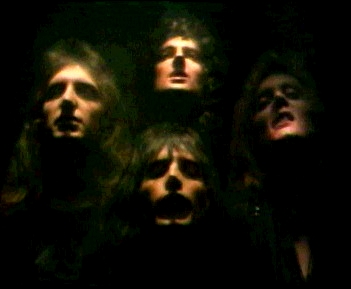
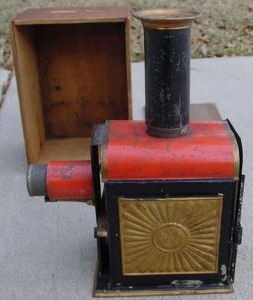


The four images displayed above are a magic lantern (top left), a still from the "Bohemian Rhapsody" music video (top right), the 'MTV' logo (bottom left) and the 'YouTube' logo (bottom right).
Subscribe to:
Posts (Atom)