Showing posts with label How. Show all posts

Thursday, 8 November 2012

Discussing "How contrasting musical genres use media language to appeal to their target audience through music videos"


How contrasting musical genres use media language to appeal to their target audiences through music videos

Here I will be discussing the two contrasting musical genres, Pop and Rock.

Pop (even though it refers to “popular music”) in today’s world, usually sticks to music of a particular style. Pop plays heavily on the emphasis of the actual artist, which is shown in a variety of ways in music videos. Take for example the popular music video “As Long As You Love Me ft. Big Sean” by Justin Bieber. In terms of camera, they shots and angles for the majority of the video revolve very much around him, because as mentioned, pop puts particular emphasis on the artist, which is most likely because they are seen as desirable for a number of reasons, which is a base for pop music; an artist that you want to actually see as well as hear. Reasons for wanting to see the artist can range from the fact they are physically attractive, for example Justin Bieber, or the fact they have unique style, for example ‘Lady Gaga’, to many other reasons. The editing also helps compliment the artist, since the cuts in the video mostly just carry the focus on them from one shot at one particular angle to the next, again adhering to the genre of pop music, since there is such emphasis on the artist as a selling point for the music. In terms of sound Pop music videos more than often feature lyrics, and when they do music videos often synchronise the lyrics with the artist, which again make sure they have significance to the music video, such as in Justin Bieber’s music video where most of the lyrics are accompanied by visuals of Justin seemingly singing them. Finally, in terms of Mise-en-scene within Pop music videos, that which is within the frame can denote to anything, be it costume, makeup, prop, or anything else that can be viewed by the audience. This aspect of music videos can really help set up distinct styles to certain artists (since the focus is usually on them within the scene), an example is ‘Lady Gaga’, who through costume, makeup and props has given herself a very unique image, and one that works very well with the target audience, since they are always wondering what she will come up with next for her music videos. The target audience for Pop ranges vastly and is very dependent on the artist. For example, I would say Justin Bieber’s music is mostly aimed at a female audience around the ages of 12 – 18, whereas ‘Lady Gaga’ I would say aims at a male and female audience anywhere between the ages of 13 – 21+.

Rock music videos differ greatly to Pop music videos, this is because with Rock music, bands really enjoy playing the music that they create through their instruments, and as a result, if they do choose to create a music video the focus is usually on the music. Take “Through The Fire And Flames” by ‘Dragonforce’ for example; the camera shots and angles within the video are mostly centred around the instruments the band members are playing, and the level of skill at which they play. The editing helps enhance this, by adding a picture within picture effect within the music video, showing various parts of the song being played, and the speed at which the hands of the band member can coordinate the strings of their guitars. The sound within the music video is seemingly synchronous with the band actually playing their instruments, and in the case of lyrics this is the same; synchronous, again promoting the importance of the music over their personal image. Mise-en-scene usually always shows a casual demeanour in terms of those who play Rock music, because as stressed, the focus is the music. These people seem to not care what they look like as the focus isn’t on them, and honestly I would say they probably spend more time sprucing up their instruments for the music video than they do themselves. I think it is because of Rock’s emphasis on the importance of the instruments creating the song that band members don’t use themselves as promotion material. Rock fans appreciate a bend for their level of skill with an instrument, whereas Pop artists are appreciated for looks on a much larger scale.

Rock and Pop therefore, as you can see by these two paragraphs, are very varying genres. With Rock placing a much larger focus on skill in terms of the creation of music and promotion of the artists through their music, and Pop largely basing around looks and therefore the artist themselves, physically, as an icon for their music.


"Through The Fire And Flames" Music Video ('Dragonforce')

Friday, 2 November 2012

Answering the question "How did the music video originate and what is its contemporary purpose?"


Some information seen below is information that can also be seen in my flowchart describing how music videos came about, since the information is the same.


How did the music video originate and what is its contemporary purpose?

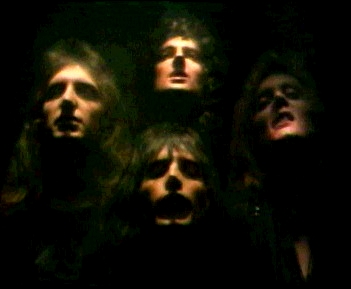
The first music video is argued to be “Bohemian Rhapsody” by ‘Queen’, and while this may be true this was not the origin of music video. As before the creation of an actual music video similar productions involving sound and moving picture to accommodate it were used.

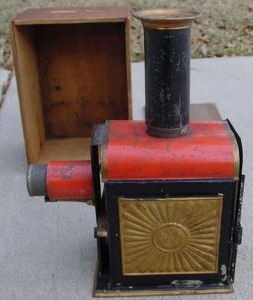
In 1894 Edward B. Marks and Joe Stem hired George Thomas and various other performers to promote sales of their song “The Little Lost Child” by using a ‘Magic Lantern’, an early type of image projector developed in the 17th century, to project a series of still images to accompany live performances of their song. This became a popular form of entertainment known as ‘Illustrated Song’, showing even before actual music videos were born per se, that images were used to accompany music.

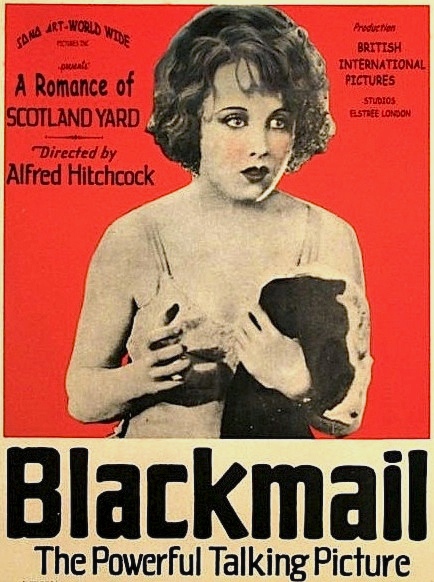
From this point on sound, including dialogue, was used to accompany film and live performances. Examples include the ‘phonoscène’, which combined chronophone sound with a chronograph film, show with actors lip-synching to the sound recording, and carrying on from this the official “Talkies” – sound films incorporating synchronised dialogue. Early 1930’s cartoons featuring musicians performing on-camera in live action segments, and in France during the late 1950’s, the invention of the ‘Scopitone’ – a visual jukebox leading to short films being produced to accompany songs (the idea spread to other countries, with similar machines being presented, such as the ‘Color-Sonic’ in the US, and the ‘Cinebox’ in Italy).

Only a few years later, in 1965, popular British band ‘The Beatles’ began creating promotional clips called “filmed inserts”. The purpose of these was so that the group could promote their record releases without having to make actual in-person appearances, allowing their new records to be known and promote the band itself. Soon after this promotional clips became much more important, and were created by well-known artists such as ‘The Rolling Stones’ and ‘The Who’.

Ten years on, and what is considered by many to be the first music video, was born. On the 31st of October 1975, poplar band ‘Queen’ released a promotional video for their song ‘Bohemian Rhapsody’. This music video was created in order to promote the band and the song, much like how promotional clips did, only this was a full length video. It's argued that this is what started the entire music video genre, and so this is how music videos originated. But what is their contemporary purpose?
Just as was the focus of the first promotional clip – created by ‘Queen’, it is to promote the song and to promote the artist, often through sex appeal or unique image, take for example Cheryl Cole or Lady Gaga.

Television helped cater to this way of artists further promoting themselves, with the creation of ‘MTV’. ‘MTV’ stands for Music Television, and unlike today where most of what it does is try to get us, the audience, to watch TV-trash such as “16 and Pregnant”, it’s primary focus used to be showing music videos in order to help further promote artists and their music, and with an entire channel originally dedicated to showing music videos constantly, this wasn't hard to do.

Even with ‘MTV’ showing music videos less and less nowadays, it didn't stop other TV channels eventually showing music videos, as now more than ever are there channels dedicated to only playing music videos 24/7 an nothing else, providing constant air time for artists. Although still, the most popular music video platform isn't the television, it's the Internet.

Popular video site ‘YouTube’ plays host to thousands of music videos from multiple huge record labels, such as ‘Warner Music Group’ and ‘Sony BMG Music Entertainment’, as well as music videos from thousands of unknown artists hoping to get recognised for their talent and signed with record labels, such as the case of Justin Bieber. It allows anyone with an Internet connection to view any music video that is uploaded whenever they want, and allows people to share those videos with people, thus creating even more attention around them. Originally popular site ‘MySpace’ was home to artists hoping to get known and promote their music, although now it seems everything music related is uploaded straight to ‘YouTube’, since it offers such ease when finding the exact song or music video someone wants to see at that exact time. It is this that has fuelled the purpose of contemporary music videos; to promote the artist and song, thus increasing awareness and most likely generating profit for the record label.

So as said previously, contemporary music videos’ purpose is to promote the artist and the song, which in contemporary society, thanks to Web 2.0, is easier than ever.


The four images displayed above are a magic lantern (top left), a still from the "Bohemian Rhapsody" music video (top right), the 'MTV' logo (bottom left) and the 'YouTube' logo (bottom right).

Tuesday, 23 October 2012

'How music videos came about' Flow Diagram

Below you will see my flow diagram for how music videos came about, as well as some other interesting extra information I found while doing research.


Please click on the image of my flowchart to isolate it for easy viewing, since some of it may be blocked out by the post list and image of myself on the upper right-hand side of the page.

Also for your viewing pleasure, here are some images of things I've mentioned in my flowchart.


A still from 'Queen's' music video for "Bohemian Rhapsody"


An example of a 'Magic Lantern'


A still from Michael Jackson's music video for "Thriller"


An example of a 'Scopitone' machine


An ad for a 'Talkie' film, named "Blackmail"

I hope you all enjoyed my flowchart and extra images, that's all for now, see you all soon! :D